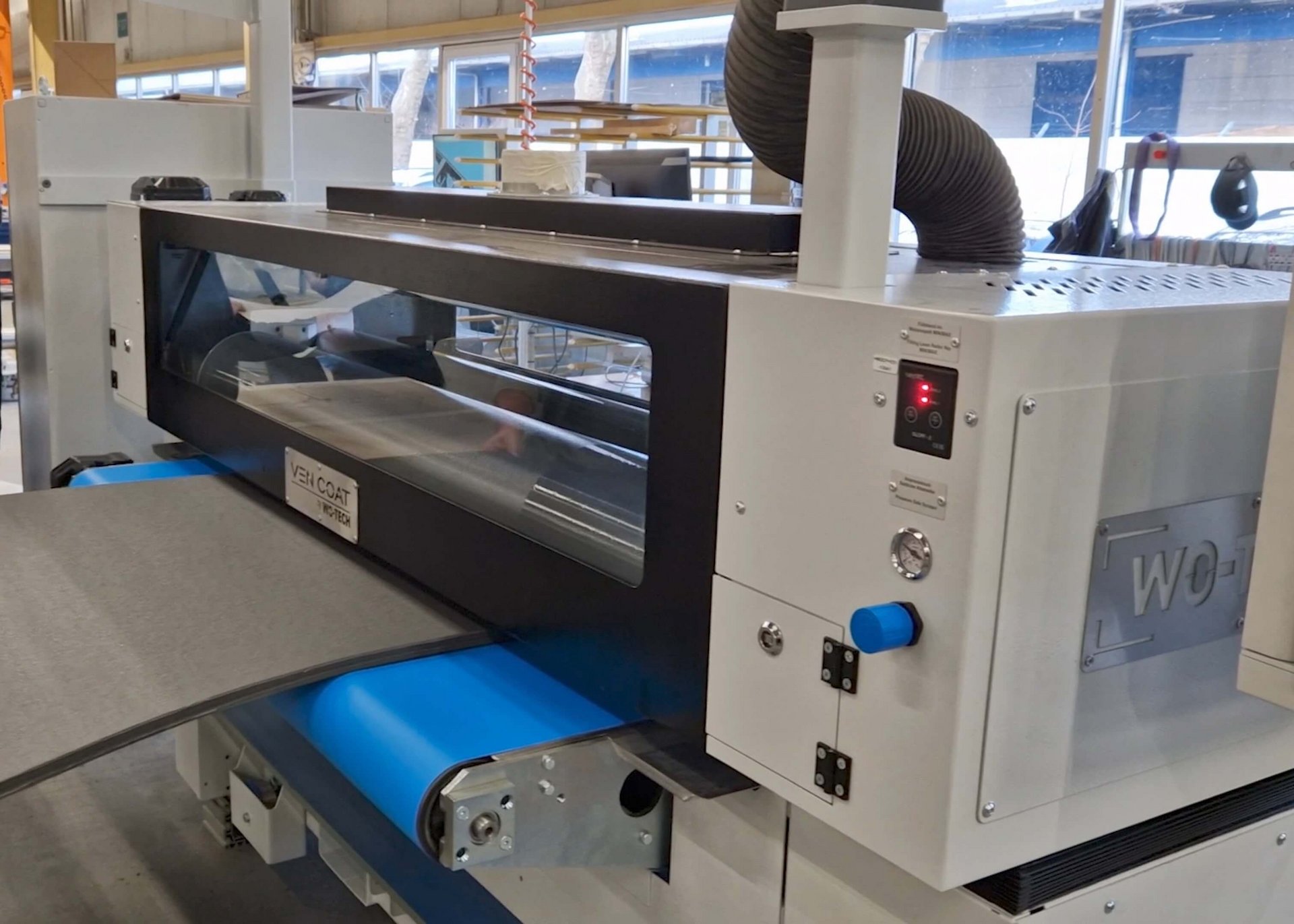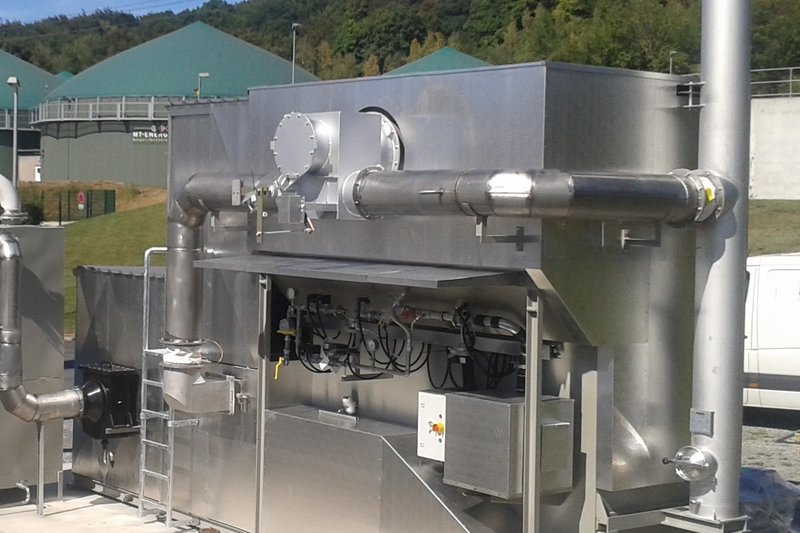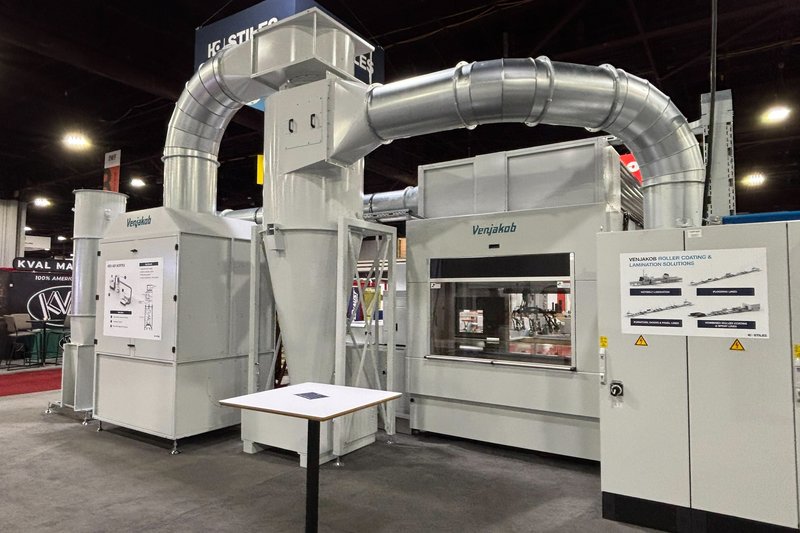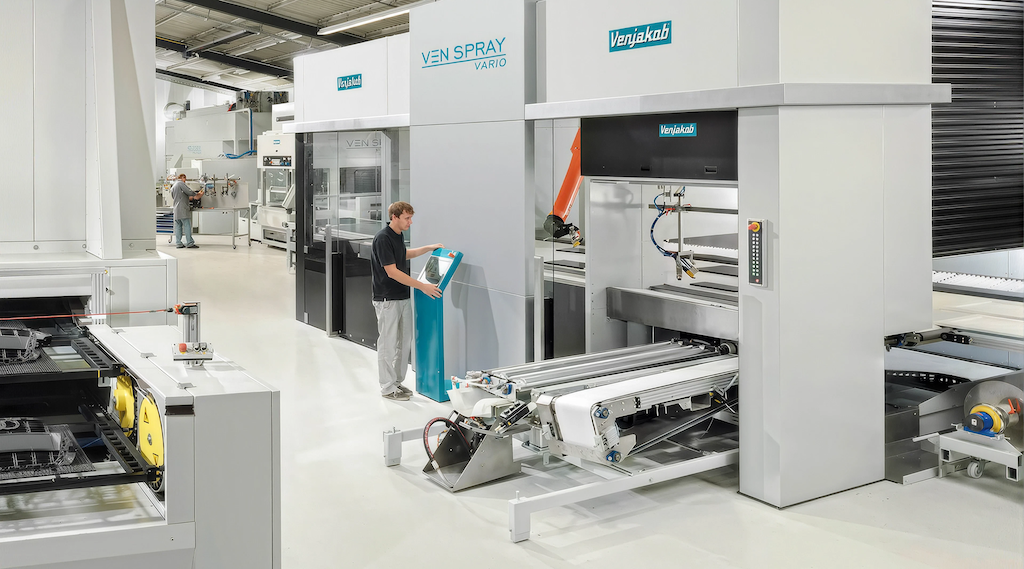

If materials are to be automatically bonded together in industry, hot melt adhesive application using the rolling process offers a high degree of flexibility for different applications. Up to now, thermal oil and water have mainly been used to heat the rollers. Venjakob, a specialist in customised coating solutions, claims to be the only series supplier of hot melt roller application machines with inductive roller heating to date. Users benefit from lower energy and operating costs while reducing their CO₂ emissions.
Hot melt adhesives are used, for example, to provide kitchen fronts, furniture or doors with decorative surfaces, to bond multi-layer floor structures together or to apply sound-insulating elements. Different adhesives are used depending on the requirements.
Since 2016, the East Westphalian family-owned company Venjakob has been developing user-orientated rolling machines for the application of coats, fillers and adhesives in a technology partnership with Wo-Tech.
Inductive heating versus oil or water
When it comes to adhesives, a distinction is made between cold adhesives and hot-melt adhesives. Temperatures between 120 and 180°C are required to melt the adhesive in the dosing roller. Until now, it was only possible to use liquid heat transfer media such as thermal oil or water. Heating with water is only possible up to a temperature of 160°C. Thermal oil, on the other hand, can be heated up to 260°C and is therefore used more frequently. An external heating unit with oil, for example, requires twice the power compared to heating with water.
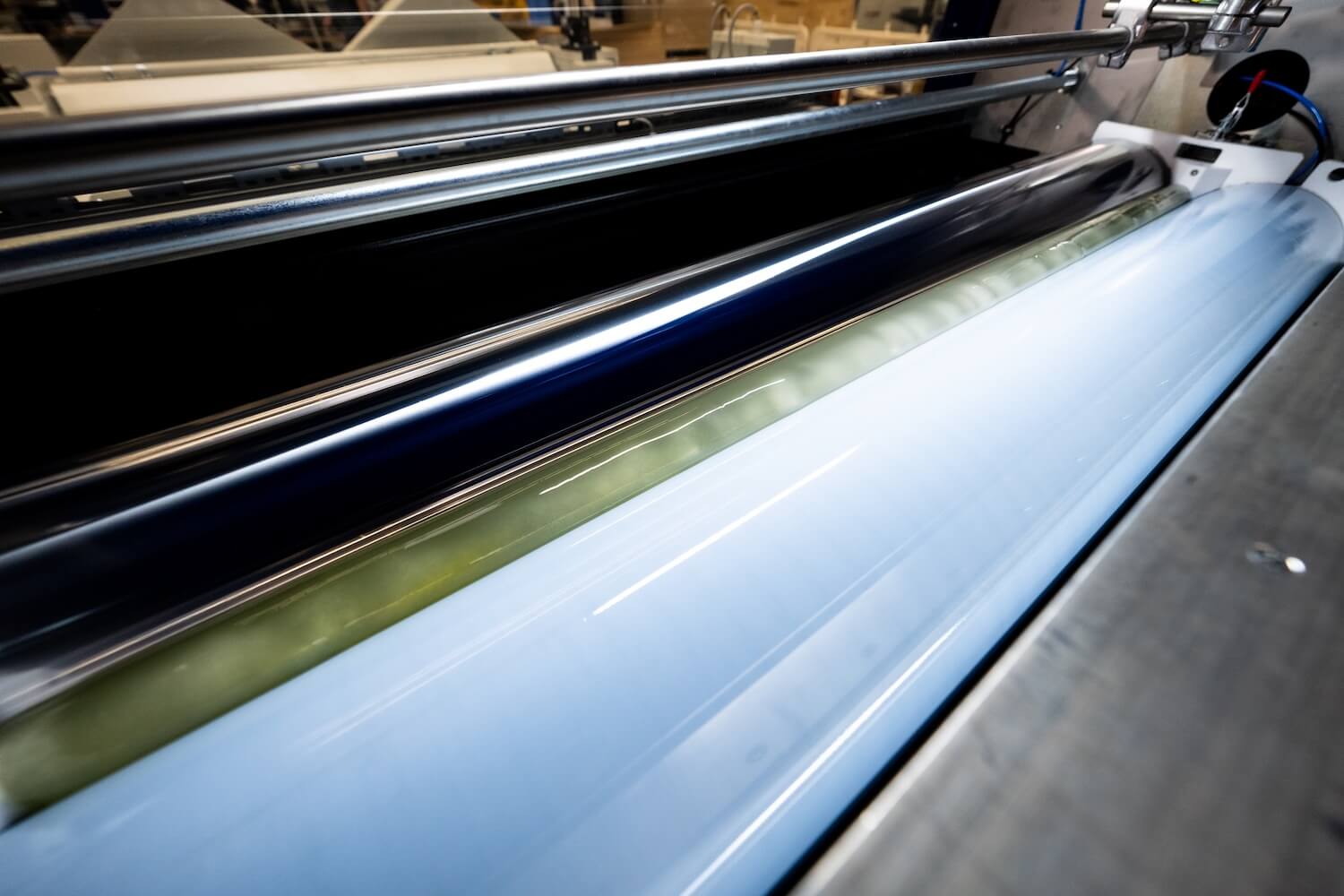
As a result, Venjakob was looking for a more environmentally friendly and energy-efficient alternative. An internal brainstorming session gave rise to the idea of installing inductors in the dosing rollers. These generate a magnetic field that heats the jacket of the roller up to 210°C. This technical solution offers many advantages. It does away with the need for external peripherals. The heat is distributed evenly over the roller surface. There are no heat losses, e.g. to oil pipes.