

Incineration processes for industrial exhaust air purification
Incineration processes are central to industrial exhaust air purification and are used wherever VOC-contaminated or alternating exhaust air needs to be treated safely. Especially in surface technology - for example in the wood and furniture industry, automotive industry, aviation, building materials, construction elements, glass, plastics and metals processing - it ensures stable purification levels and reliable process conditions.
With VEN CLEAN AIR, Venjakob offers flexible afterburning systems that can be optimally adapted to industry-specific requirements.
VEN CLEAN AIR incineration systems
Durable technology and stable emission values
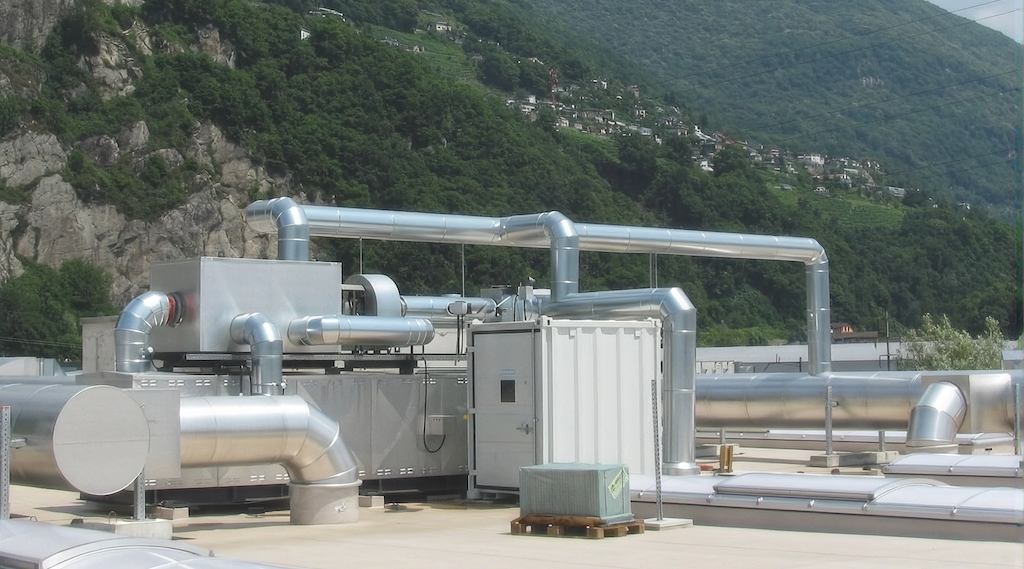
Our VEN CLEAN AIR product family includes thermal, regenerative and catalytic incineration systems for exhaust air containing VOCs. They cover a wide range of applications - from highly fluctuating loads and large volume flows to specialised, uniformly polluted exhaust air flows. Each system combines energy efficiency with durable technology and stable emission values.
Explore the incineration systems


Post-combustion processes reliably oxidise VOCs to CO₂ and water. Depending on the exhaust air flow, load and energy requirements, three established processes are used. The following overview facilitates the selection for applications in coating, drying, adhesive application and process air ducting.


Exhaust air purification: sustainable and safe
Sustainable exhaust air purification relies on efficient technologies that reduce emissions and conserve resources. Modern afterburning systems support this claim through stable process control, energy optimisation and complete data transparency.
- Reduction of VOC emissions
- Energy savings through waste heat utilisation
- Stable plant operation for reliable limit values
- Seamless process data for QA and environmental management
- Reduced primary energy consumption through heat recovery
How does the composition of the exhaust air influence the choice of processes?
VOC type, particle content, temperature and humidity determine the temperature window, catalyst selection and system layout.
What role does heat recovery play in economic efficiency?
A high degree of heat recovery significantly reduces operating costs and can make thermal processes almost energy self-sufficient.
How are load fluctuations reliably equalised?
Modern control systems dynamically adapt temperature, flow and valve routing to changing volume flows.
What are the requirements for integration into existing plant lines?
Interfaces to conveyor, coating and drying modules as well as flexible communication protocols are crucial.
How is compliance with legal VOC limits documented?
Via continuous temperature and process data recording with audit-proof storage.


We are happy to advise you
Would you like to find out more about our systems, processes or solutions - or do you already have a specific project in mind? Our contacts are on hand to provide you with expert advice, technical expertise and many years of experience.

Dirk Jackisch
COO Venjakob Umwelttechnik
Telephone: +49 5066 9806-37E-mail: ed.tu-bokajnev@hcsikcaj.krid


