
The Eco-Logic of Robotics—How Intelligent Process Integration Combines Sustainability and Cost-Effectiveness
Robotics is the most flexible form of industrial automation. While traditional automation solutions are designed for fixed movement sequences, industrial robots—thanks to their multi-axis design—can be adapted to different workpieces, geometries, and processes. However, their true added value lies not solely in this flexibility. What is crucial is their ability to perform complex tasks precisely, reproducibly, and in a resource-efficient manner—provided they are intelligently programmed and integrated at the right point in the overall process.
This is precisely the approach taken by Venjakob. The specialist in coating solutions based in Rheda-Wiedenbrück develops both traditional automation solutions and robot-assisted systems. “The technology we use is determined not by a preference for a particular solution, but by the customer’s specific requirements. Our goal is always to develop the most technically and economically sound solution for every application,” says Philipp Wöstmann, Head of Product at Venjakob. Whether it’s conveyor technology, handling, or robotics—the key is always the optimal interaction of all components.
Robots Must Be Trained
“While an industrial robot offers a wide range of movement options, it must be trained or programmed for its tasks and intelligently integrated into the process,” Wöstmann points out. A common concern among many customers is that, after purchasing a robot, they’ll be left to fend for themselves: How do I operate the robot? Who handles maintenance?
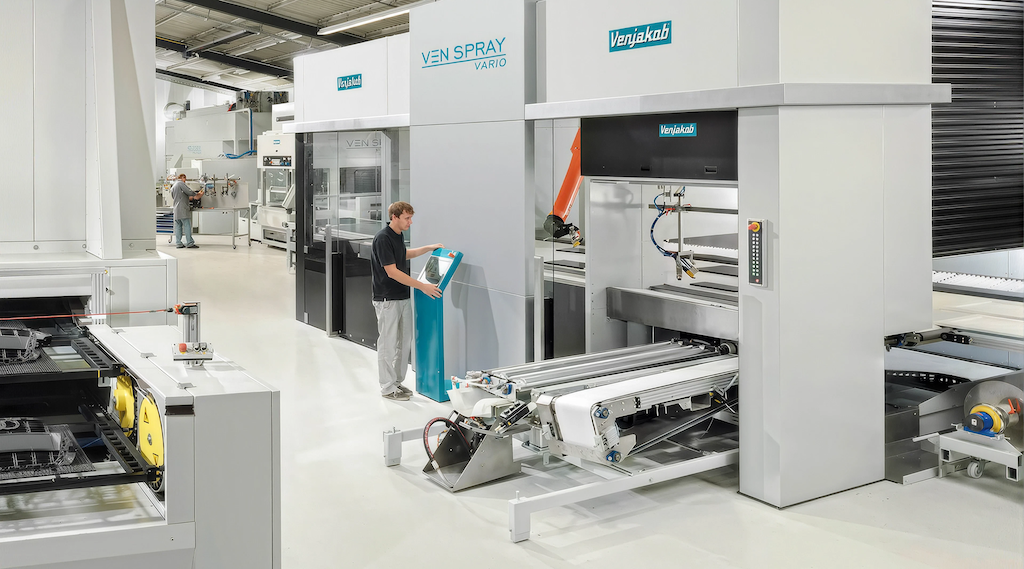
For Venjakob, this isn’t an issue. “We partner with renowned robot manufacturers and program every single step in close coordination with the customer.” For example, an initially “empty” ABB robot is transformed into a customized Ven Spray Robot for coating complex geometries or a customized Ven Move Robot for gripping delicate workpieces or transporting heavy components. The actual engineering achievement lies not in the robot itself, but in the development of the appropriate motion and process strategy.
Window Manufacturer Relys on Integrated Robotics
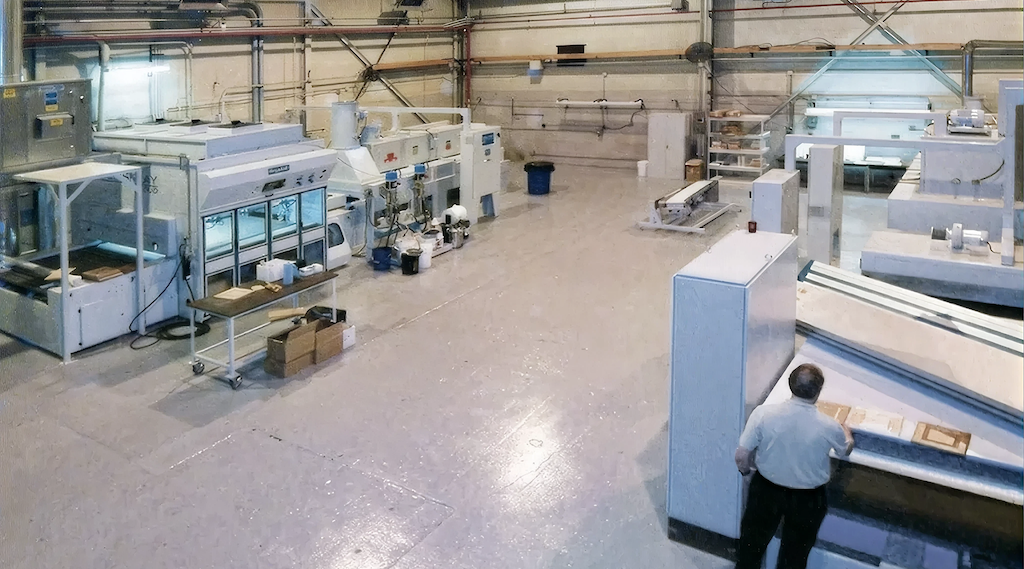
An impressive example of this holistic approach is the automation project at window manufacturer NorDan. Venjakob developed a production line for coating and drying individual window components and integrated a robotic solution featuring three painting robots. After cleaning and preheating, the order-specific batches are automatically transported via the conveyor system into the paint booth.
This is where the flexibility of robotics really shines. Different workpiece geometries and recesses required customized motion, spraying, and path strategies. A particular challenge was specifically excluding the corners of the profile frames from the coating process to improve gluing performance. To address this, Venjakob developed a customized application strategy that combines precision with a stable and repeatable process. Philipp Wöstmann also emphasizes that no robotics experience is required on the customer’s part. “The information is entered on the screen and managed by the control system.”
Kim André Jakobsen, System Manager for Digital Production at NorDan, also confirms that this holistic approach is paying off: “This system represents an important step forward for us. Full automation enables us to specifically increase our production output and sustainably expand our overall capacity.”
Robots as Specialists in Workpiece Handling
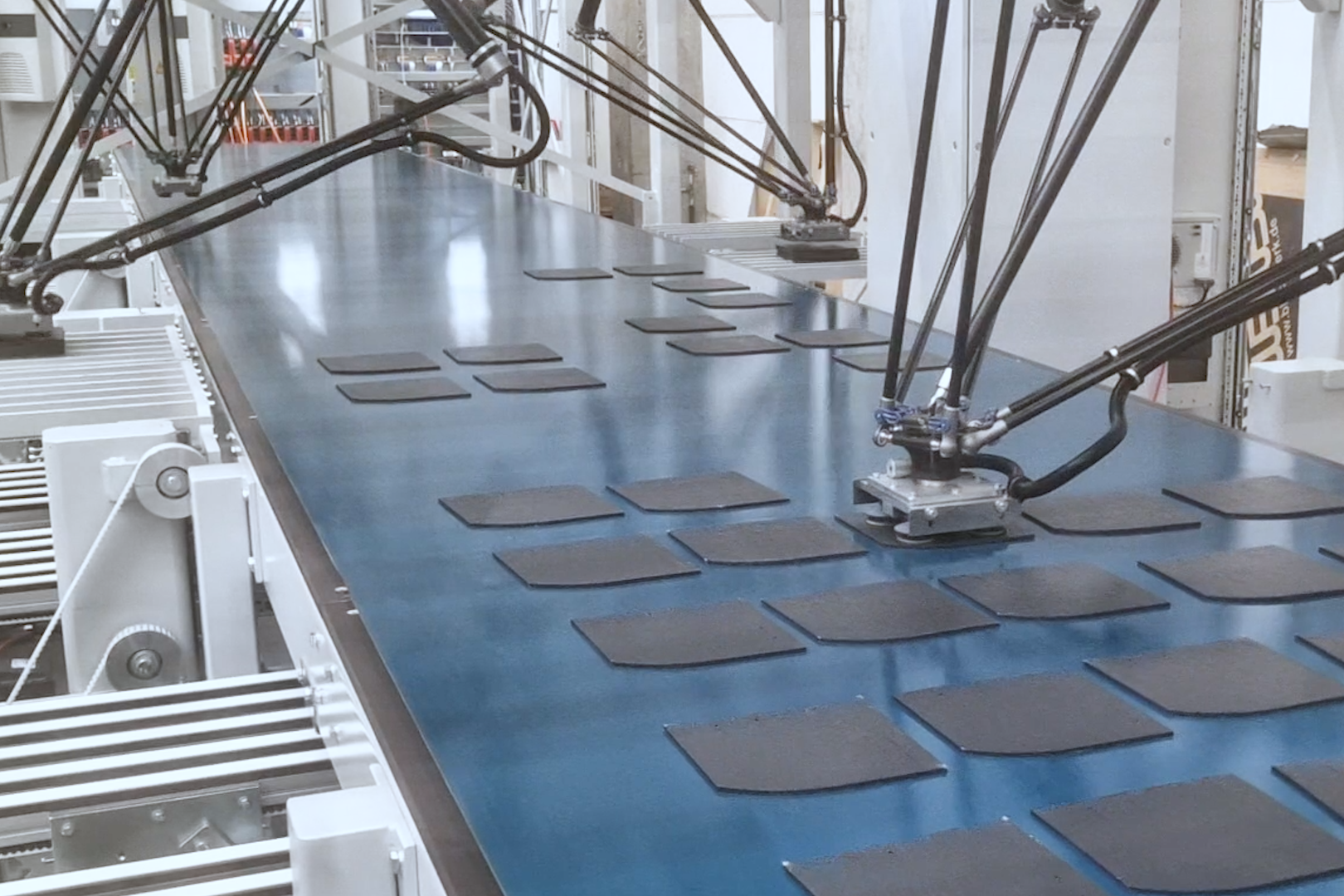
Robotics is by no means limited to coating processes. Another real-world example demonstrates its benefits in automated workpiece handling. For a manufacturer of cabinets and coat racks, a multi-axis robot unloads long and large-format components from the conveyor belt into horde carts. This reduces the need for personnel, alleviates ergonomic strain on employees, and simultaneously minimizes the risk of damage. Robotics also demonstrates its strengths in the cosmetics, glass, and plastics industries. Here, handling robots grasp delicate workpieces at high speed, position them precisely, and feed them reproducibly into the subsequent process steps. This reduces scrap, increases process reliability, and ensures consistently high quality.
The Benefits Become Apparent During Operation
For Venjakob engineers, robotics becomes interesting whenever its flexibility generates measurable benefits. These benefits usually become apparent only during ongoing operation. Typical effects include:
- lower paint and material consumption due to more precise application and reduced overspray,
- fewer rejects and less rework due to reproducible processes,
- higher cycle rates due to optimized motion sequences,
- reduced setup, color change, and downtime,
- lower energy consumption due to uniform coating and optimized drying processes,
- higher system availability and process reliability,
- consistent quality—regardless of shift or operating personnel.
It is precisely these factors that determine a system’s actual operating costs and often decide when an investment pays for itself.
Whether an automation solution pays off in the long term is therefore not decided during commissioning, but rather during daily operation. This is exactly where it becomes clear how well robotics, process knowledge, and system integration work together. The true “eco-logic” of robotics does not lie in deploying as many robots as possible. It lies in selecting the right automation solution for each application and intelligently linking all process steps together. In this way, sustainability and cost-effectiveness are not opposites, but rather the result of a well-thought-out overall concept.
We are happy to advise you
We develop solutions that optimize processes and improve results - reliably, efficiently and precisely tailored to your system. We will be happy to advise you personally on individual solutions in the field of robotics.

Christian Streit
Head of Wood | Building Materials Division
Telephone: +49 5242 9603-162E-mail: ed.bokajnev@tierts.naitsirhc

Gert große Deters
Business Unit Manager for General Industry & Automotive
Telephone: +49 5242 9603-184E-mail: ed.bokajnev@sretedessorg.treg


