

How to pre-treat surfaces with ionisation and dust removal
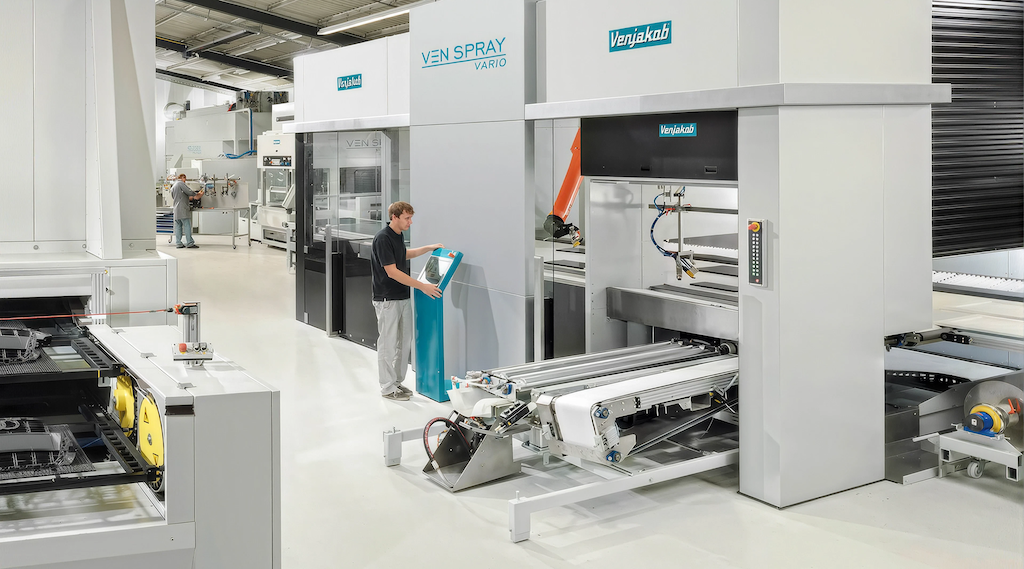
Dust sticks - and it can be very persistent. But it has no place on surfaces before coating. If you want a brilliant surface coating, Venjakob's dust extraction systems and ionisation units create excellent conditions for this. While ionisation removes the electrostatic charge on the component surface, dedusting sweeps all dust particles from the surface through the blowing nozzles of the blow-off device. Clear the way for coating - by dedusting and ionising. And how exactly does this work? At Venjakob, it works exactly as your application requires. Because we develop your individual solution, customised for your processes. Whatever industry you work in.
Why dust removal and ionisation are important for a brilliant surface coating
In the run-up to almost every surface coating, in almost every application in the most diverse areas of industry, dust on the workpieces can become a problem for the planned coating. In most cases, simply removing dust from the surface is not enough. The existing electrostatic charge often requires more than just the application of a dust removal process. While our dedusting devices remove adhering dust particles from the workpieces using blowing nozzles, additional ionisation devices are used to act on the electrical field of the component surface. It is precisely this electrostatic charge that promotes the adhesion of dust. This is precisely why we at Venjakob combine both processes: first ionisation, then dust removal with a blowing device.
The advantage of customised dedusting systems
Many factors play a role in customisation: we take all this information into account when integrating the best possible dedusting process into your production process. After all, our aim is not to offer you just any dedusting system, but the solution that will benefit you the most in the long term. That's why we offer you a wide range of dedusting/ionisation systems to suit the requirements of your production process. All Venjakob dedusting systems are equipped with blowing nozzles that remove dust particles from the workpieces. Optionally, they can also be equipped with rotating real hair brushes. Depending on the requirements, the dust extraction systems also include an ionisation unit that removes electrostatic charge from the surface so that the dust particles can be removed from the surface even better. We will be happy to customise these and other features with you.

For which areas of application are dust extraction systems and ionisation units intended?
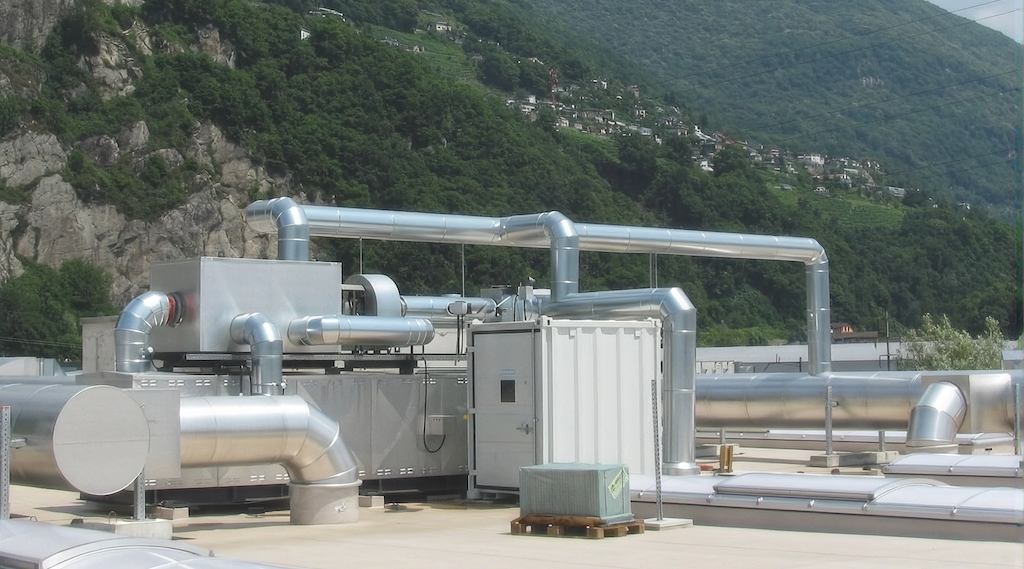
For the separation of dust by means of exhaust air - for dusts and dust particles, dust quantities and similar foreign components - we design individual dedusting and ionisation systems for you. These systems are used throughout industry.
Typical applications for dedusting and ionisation can be found, for example, in the
- Wood industry
- Plastics industry
- Glass industry
- Metals industry
- Building materials industry
Dust removal for wooden surfaces
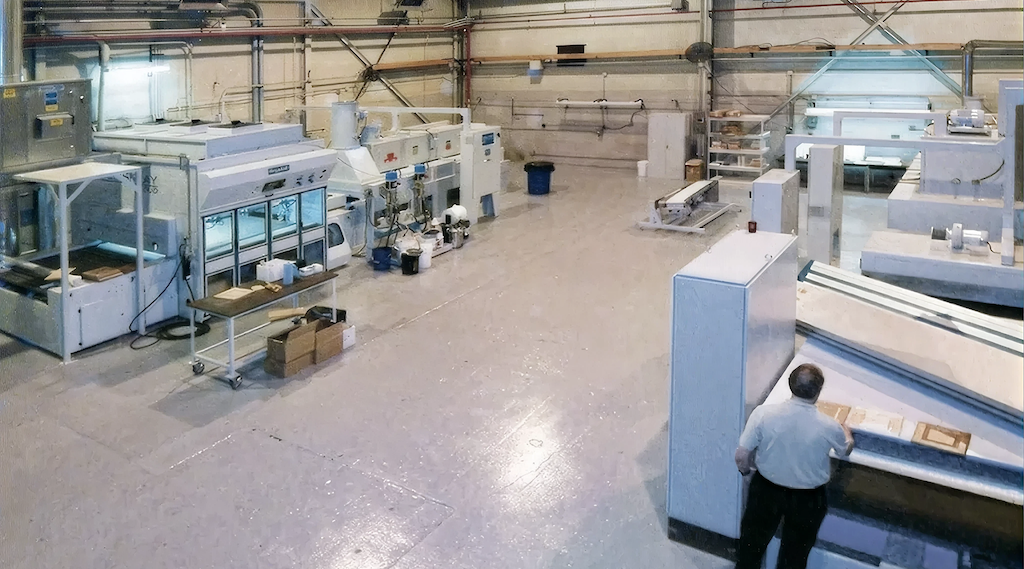
In the woodworking industry - be it for the production of kitchens, home and office furniture, in shop fitting and interior design or in yacht finishing - workpieces are almost always sanded first. In the production process, the workpieces are then transported via an integrated sanding machine to the downstream dust extraction unit before being coated or industrial finished. When wood is processed in this way, very fine particles are released that cannot always be completely captured - no matter how good the extraction system is. A high-performance dust extraction system is required to capture and separate these dust particles, which are deposited on the surface of the workpiece. For this application in the woodworking industry, we therefore often offer additional brush units to remove coarse wood chips from the surface from upstream sanding or drilling. These are mainly real hair brushes. An extraction system with integrated filtering then removes the loosened dust particles from the system with an optimum degree of separation.
When dealing with plastics/glass and metals surfaces, the primary concern is the removal of particles contained in normal room air. The electrostatic charge contributes to an even stronger adhesion of the particles.
All these contaminants must be removed without residue before the coating process in order to achieve an optimum surface result.
Materials that require ionisation
When handling workpieces made of plastics, granulate or metals, the primary aim is to remove particles from the component surface. The electrostatic charging of the components contributes to an even stronger adhesion of the particles. In addition to dedusting, ionisation is urgently recommended here because it influences the electrostatic energy of the components. But how exactly does this affect the different materials?
The pre-treatment of glass
Especially in the coating of decorative glass, functional glass, architectural glass or safety glass, the varying cleaning requirements in the production process must be taken into account for applications such as sol-gel for reflection reduction or hydrophobisation and hydrophilisation. Dust removal is also a decisive step in the run-up to the actual coating.
The requirements for plastics coatings
High-quality plastics coatings represent a similarly complex field of application. Many products used in building services and consumer electronics as well as household and electrical appliances have a coating. Dedusting and ionisation are essential if the quality of the coating is to be right in the end.
The quality of the products is crucial
Ultimately, it is important to remove all these contaminants without leaving any residue before the coating process in order to achieve an optimum surface result. Only then can the perfect quality of the coated products be guaranteed. The design of the processes varies from system to system, from application to application. At Venjakob, we customise our solutions to your specific requirements.
Individually, integrated into your processes or retrofitted
In general, our customers always receive a complete solution from us, with all components. Systems - not from a modular system, but customised to the specific coating task. But often a coating system already exists. In such cases, retrofitting is possible - or a stand-alone solution. In either case, we help to ensure that you always remain flexible in your production.
Good to know: Information on cleaning, dedusting and ionisation
To summarise, it can be said that foreign particles have no place on surfaces to be coated. The question of how cleaning and removal should be carried out and what can happen in the process also depends on whether only dust is involved. It should be noted that an electric field can sometimes form on a surface, which makes it difficult to capture the dust particles easily. This problem can be eliminated by ionisation, which cancels out the electrostatic charge of the particles so that separation is possible with a fan or blowing nozzles.
And now? Let's talk about dedusting and ionisation
Your Finishing Line - Our Process Experience. This is what Venjakob stands for. A large part of this process experience relates to the process steps that precede the actual coating. The cleaning processes that precede the coating process are highly complex. The production lines and process steps vary depending on the materials - be it wood, plastics, glass, metals or other building materials - and the end products. A wide variety of parameters play a role here. Expertise is required, starting with the most diverse cleaning, activation and pre-treatment processes. Dedusting and ionisation are just two processes. If you want to find the right solution here, you need to understand which processes are the best possible in the overall concept of a system. This requires not only knowledge, but above all trust. And it is precisely this - this special form of trust - that characterises cooperation with Venjakob. This is proven by countless successfully realised customer projects. If ionisation and dedusting - or cleaning processes in general as part of a coating project - is an issue for you, let's talk. And even better: let's not just talk to each other. Let us do it. Because we understand our business. And yours.
We are happy to advise you
We develop solutions that optimise processes and improve results - reliably, efficiently and precisely tailored to your system. We would be happy to advise you personally on individual solutions in the areas of dedusting and ionisation.

Gert große Deters
Business Unit Manager for General Industry & Automotive
Telephone: +49 5242 9603-184E-mail: ed.bokajnev@sretedessorg.treg

Christian Streit
Head of Wood | Building Materials Division
Telephone: +49 5242 9603-162E-mail: ed.bokajnev@tierts.naitsirhc


